Intern at the White House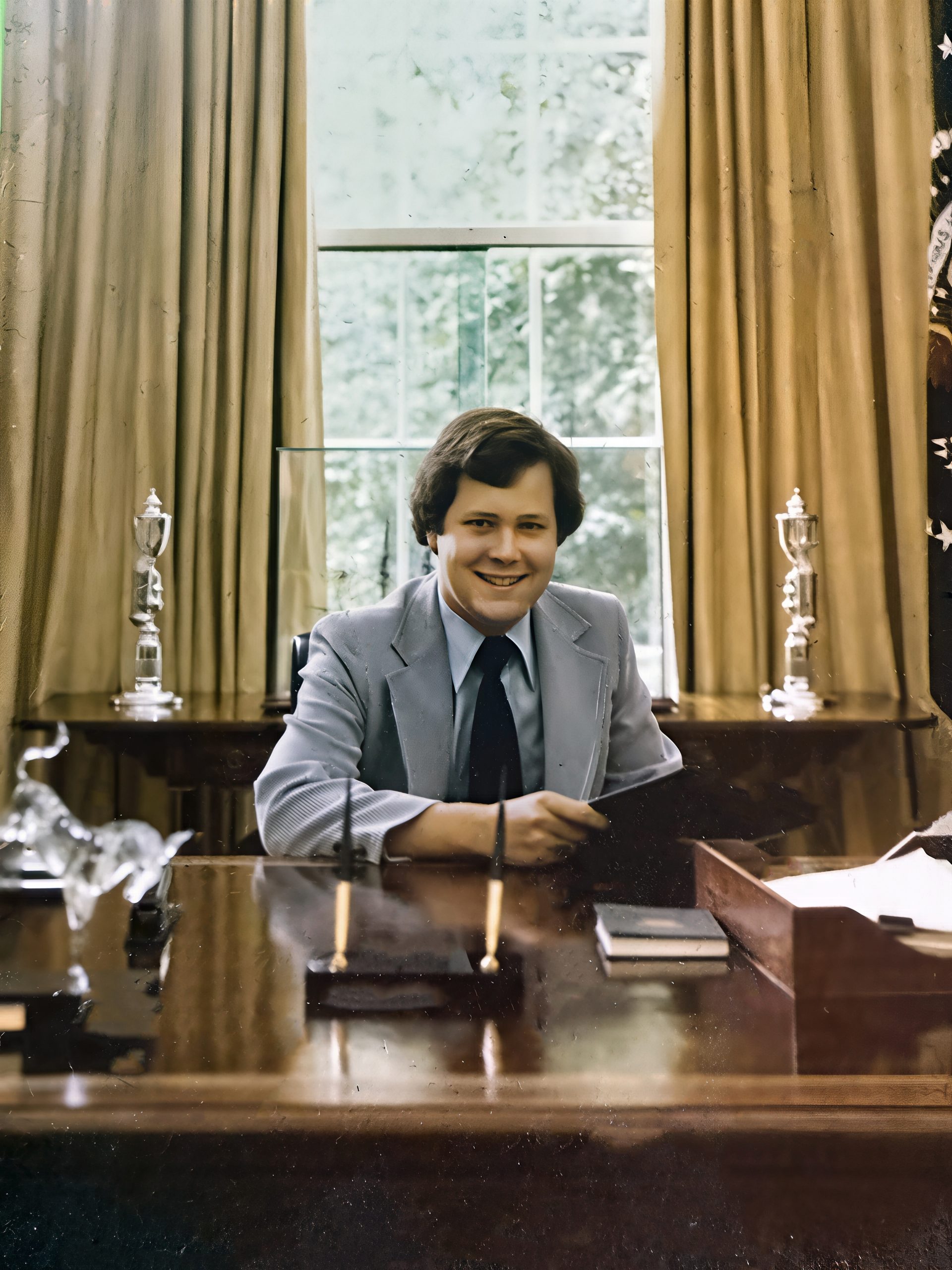 I started my career as an intern photographer in the Carter administration. It was formative in ways I didn’t fully appreciate at the time.
I watched a President who treated the office with integrity. He respected our institutions, our laws, and the people he served. He understood that the presidency was a stewardship, not a throne. That experience shaped my understanding of what leadership should look like in this country.
What I’m witnessing now under Trump is something different entirely.
The rule of law is being treated as optional. Institutions built over generations are being hollowed out. The norms that held our democracy together are being discarded for political convenience. And the consequences are real.
As a small business owner, I feel it every day. The uncertainty. The chaos. Economic policies driven by ego rather than strategy. It’s impossible to plan for the future when the ground keeps shifting beneath you. And beyond the economy, there’s something deeper being lost. A sense of shared culture and basic decency that once held us together.
I never thought I’d see the presidency reduced to this.
But I’m not writing this to despair. I’m writing because silence feels like complicity.
If you’re feeling the same frustration, get involved. Join a local ICE watch group and help protect your neighbors. Donate to the ACLU. Support nonprofit journalism that holds power accountable. These actions matter more than we think.
The institution of the presidency may be in decline, but we don’t have to be.
A Photograph from 1980. A Warning We Didn’t Heed.
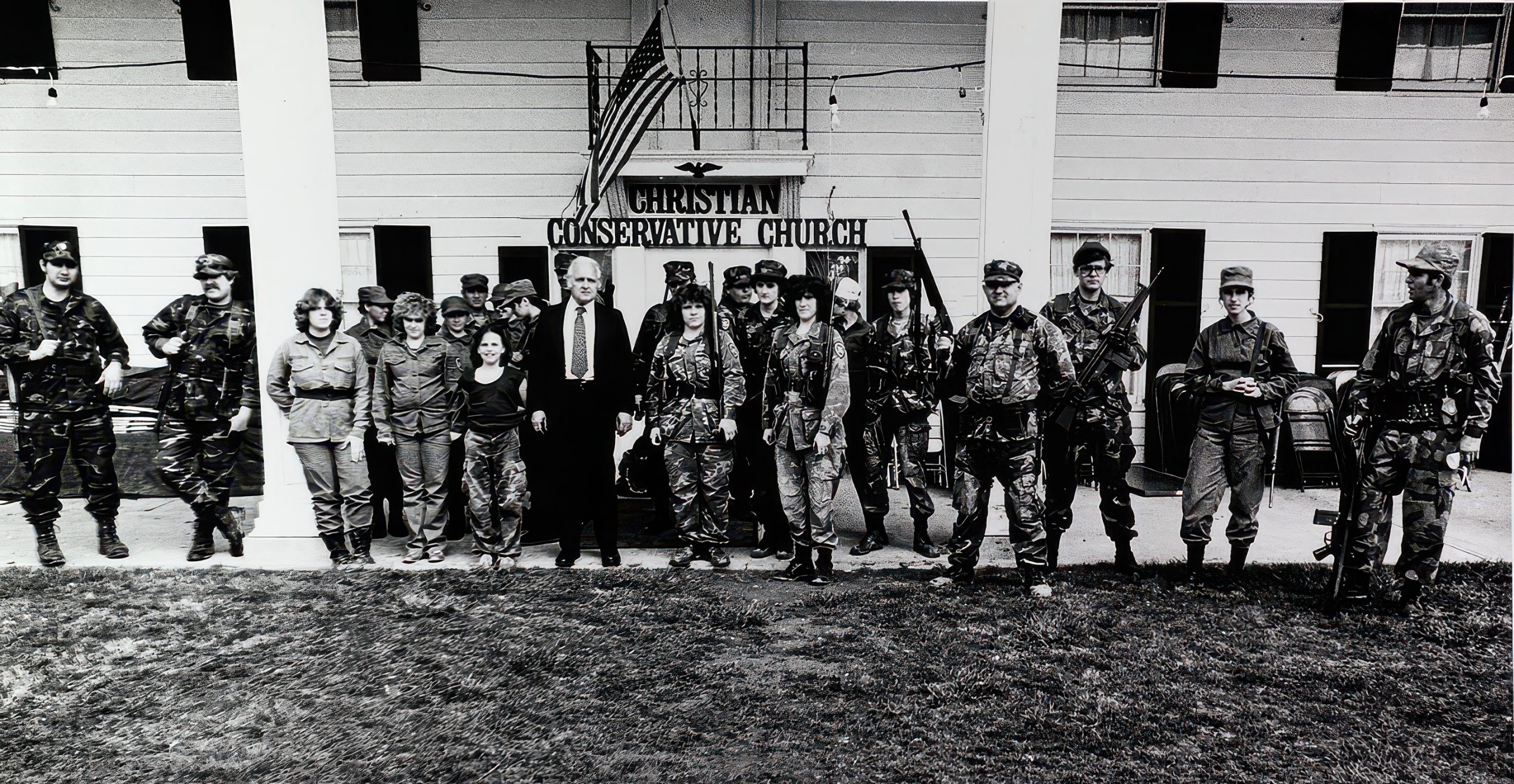
In 1980, I was a college student working as an intern at a local newspaper in Southern Illinois. I found a group called the Christian Patriots Defense League, a paramilitary organization based in rural Southern Illinois and led by a man named John R. Harrell and was able to do photo story about the group that was published.
I gained access because I wasn’t Jewish or Catholic, and because I was from Nebraska. That was enough for them.
What I found was a group of ordinary-looking Americans dressed in military fatigues, carrying rifles, and gathered in front of a building that was a replica of Washington’s Mt Vernon estate and marked “Christian Conservative Church.” An American flag flew overhead. They believed they were defending something. They believed they were patriots.
At the time, most people found it hard to take them seriously. They were fringe. They were obscure. They were out there in the countryside, far removed from the mainstream.
Forty-five years later, I look at this photograph and I no longer see the fringe. I see a template.
The antisemitic rhetoric, the white supremacist ideology, the blending of Christianity with armed nationalism: these were once confined to groups like the Christian Patriots Defense League. Today, these ideas have migrated from rural compounds to the halls of power. They are voiced by elected officials. They are normalized in public discourse. They are defended as patriotism.
I don’t share this photograph to say “I told you so.” I share it because I believe we are living through a moment that requires us to see clearly where these ideas originated and how far they have traveled.
The question I keep asking myself is this: How did beliefs that were once considered dangerous and unacceptable become an accepted part of our political landscape?
I don’t have a simple answer. But I do believe that those of us in communications and marketing have a particular responsibility. We shape language. We shape narratives. We influence what is considered normal.
We can choose to use that influence to demand better from our leaders. We can insist on language that includes rather than divides. We can refuse to normalize what should never have been normal.
This photograph is 45 years old. The choice of what comes next belongs to all of us.
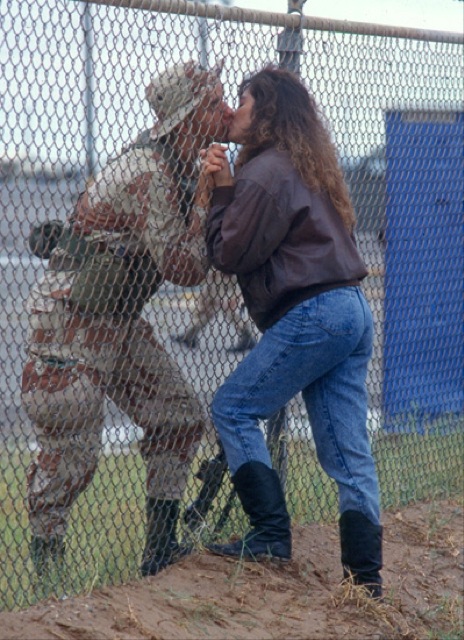
A Kiss Through the Fence. Fort Bliss, 1991.
I’ve thought about this image a lot lately.
That fence was temporary. It was a boundary that existed for a specific purpose, during a specific moment, and everyone understood it would come down. The separation was painful, but it was not meant to be permanent. It was not meant to define who belonged and who didn’t.
Today, I watch as fences—literal and figurative—are being erected across our country with a very different purpose. Not to manage a moment of transition, but to divide permanently. To separate families not for months, but forever. To draw hard lines between those deemed worthy of being here and those who are not.
We are witnessing military troops deployed not to foreign battlefields, but to our own cities. We are watching policies designed to tear apart families who came here seeking exactly what that soldier was fighting to protect: safety, opportunity, the chance at a better life.
The soldier in this photograph was willing to sacrifice everything for his country. The woman on the other side of that fence was willing to let him go, trusting that the separation served a greater purpose.
What purpose does today’s separation serve? When we deploy troops against refugees? When we criminalize families for wanting what all families want?
That fence at Fort Bliss came down when the deployment ended.
The question I keep asking is this: Are we building fences now that we will never be able to take down? And what does that say about who we have become?
Some separations are necessary. Others are a choice. We should be very careful about which ones we normalize.
Remembering Sen. George Norris
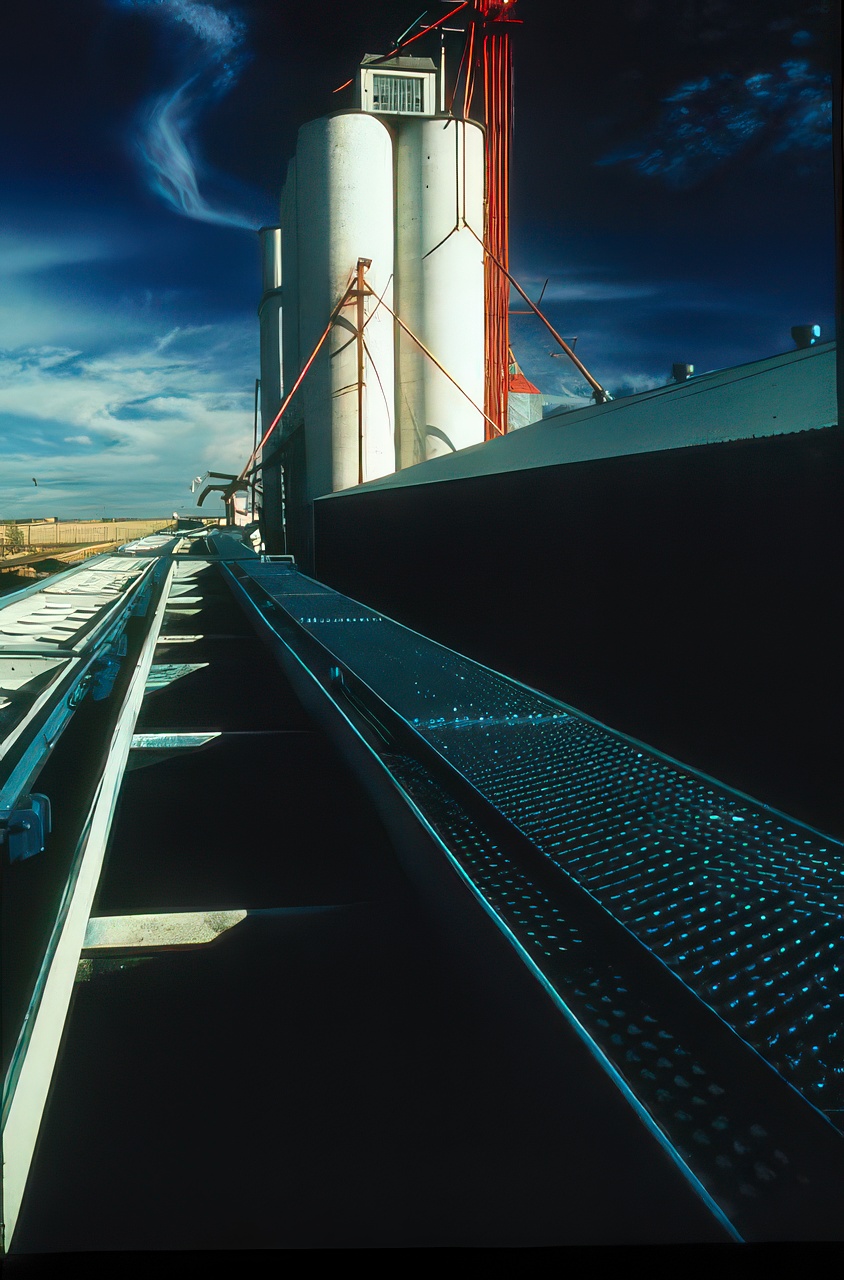
Growing up in central Nebraska, you learn to navigate by grain elevators.
Rising above the flat plains, they were the tallest things for miles. You could see them long before you reached the next town. They told you where you were and where you were headed. As a kid, they were my fixed points of reference across an open landscape.
I didn’t know it then, but I was also learning about a different kind of landmark.
In school, I studied Senator George W. Norris. A Republican who took on his own party’s Speaker of the House and won. A man who filibustered the Armed Ship Bill because he believed it would drag America into war. A Senator who supported a Catholic Democrat for President in 1928 because he believed it was right, knowing full well it could end his career in Nebraska.
He was called a traitor. His own state legislature condemned him. Newspapers predicted his political death. Friends abandoned him. And he kept going.
Norris once declared: “I would rather go down to my political grave with a clear conscience, than ride in the chariot of victory, a Congressional stool pigeon, the slave, the servant, or the vassal of any man, whether he be the owner and manager of a legislative menagerie or the ruler of a great nation. . . . I would rather lie in the silent grave, remembered by both friends and enemies as one who remained true to his faith and who never faltered in what he believed to be his duty, than to still live, old and aged, lacking the confidence of both factions.”
George Norris became a point of reference for what principled leadership looks like. Visible from a distance. Unmovable in a storm.
I think about him a lot lately.
Because right now, in the United States Senate, I see very few leaders willing to risk anything for what they know is right. I see silence where there should be conviction. I see loyalty to party over loyalty to country. I see elected officials who took an oath to the Constitution treating it like a suggestion.
Norris didn’t have polling data or social media consultants. He had his conscience. And that was enough.
We need that again. Desperately.
If you believe we deserve a government that operates with integrity and courage, speak up. Vote for it. Demand it. Because the leaders we tolerate are the leaders we get.
It’s time to return to civil government. Not perfect government, but civil government. Where disagreement doesn’t require demonization, and where doing the right thing isn’t a career-ending move.
George Norris showed us it’s possible. It’s on us to demand it again.
This photo never ran.
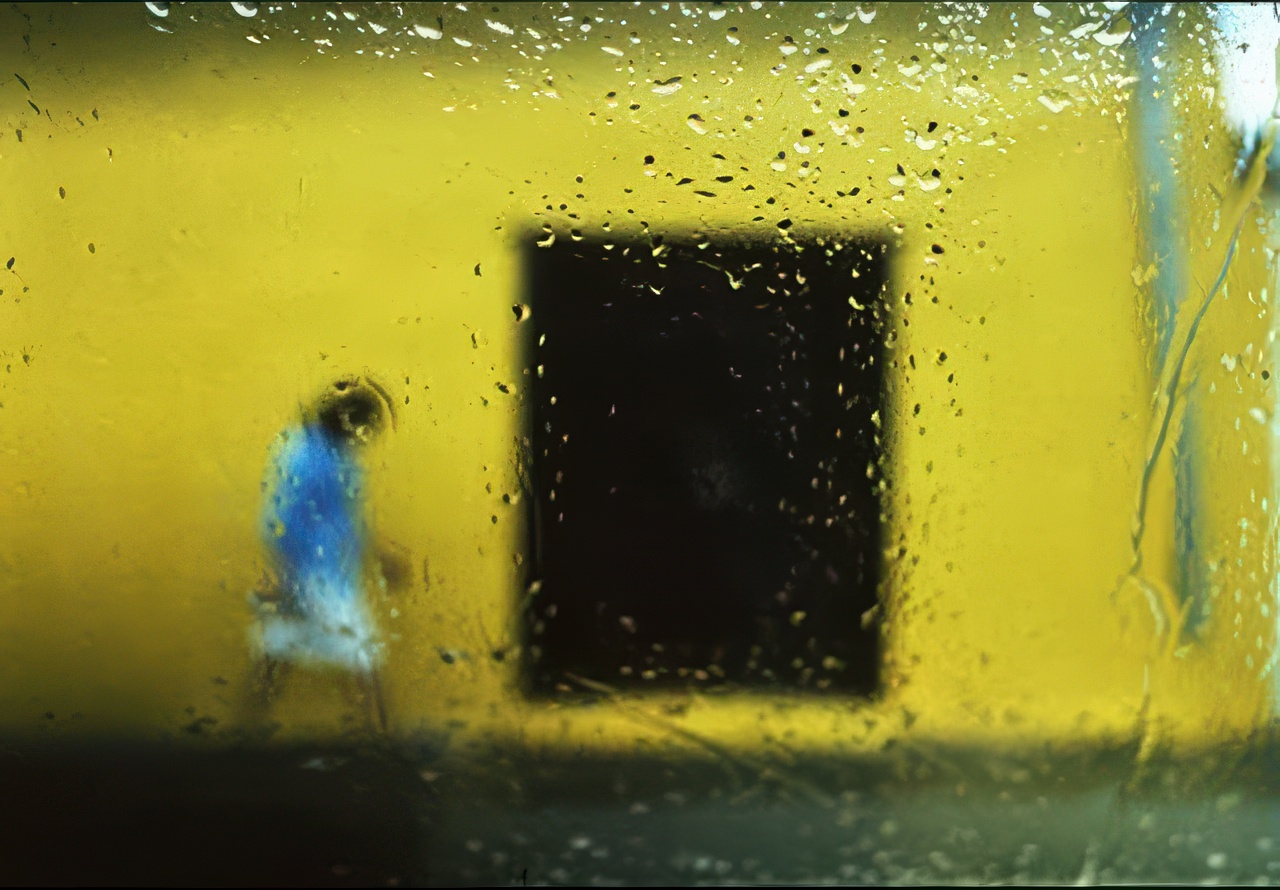
After 45 years of work as a photographer, I still remember the sting of hearing why: my assistant managing editor called it “too arty.”
That moment changed the course of my career.
When I joined the El Paso Times as photo editor, I was handed an ambitious mandate to make this paper the Orange County Register of the Southwest. I took that seriously. I pushed the photography staff to expand their creative limits. I brought in Bill Strode, a two-time Pulitzer Prize winner, and Magnum photographer Susan Meiselas to mentor the team.
Strode’s blunt assessment after reviewing the newspaper? We ran way too many headshots.
The photography staff was doing exactly the kind of work that could transform the paper and then an image like this one got killed for being too creative.
I knew it was time to go.
The following year, I took a job at the Orange County Register. The same paper I’d been told to emulate. I like to think my old editors noticed.
What moments in your career told you it was time to move on or push harder?